Whether you’re cooking up your favorite brownie recipe, a new summer-veg frittata, or just brewing a cup of coffee, you’re using what lawmakers and regulators refer to as “cookware.” You probably expect your cookware – frying pans, air fryers, muffin tins, stock pots, coffee pots, etc. – to be made with non-toxic materials that are safe for food-contact and safe for your family.
Here’s a less-than-fun-fact: some cookware items are made with materials and chemicals that are hazardous to human health or the environment – this includes PFAS (per- and polyfluoroalkyl substances, also commonly referred to as “forever chemicals”).
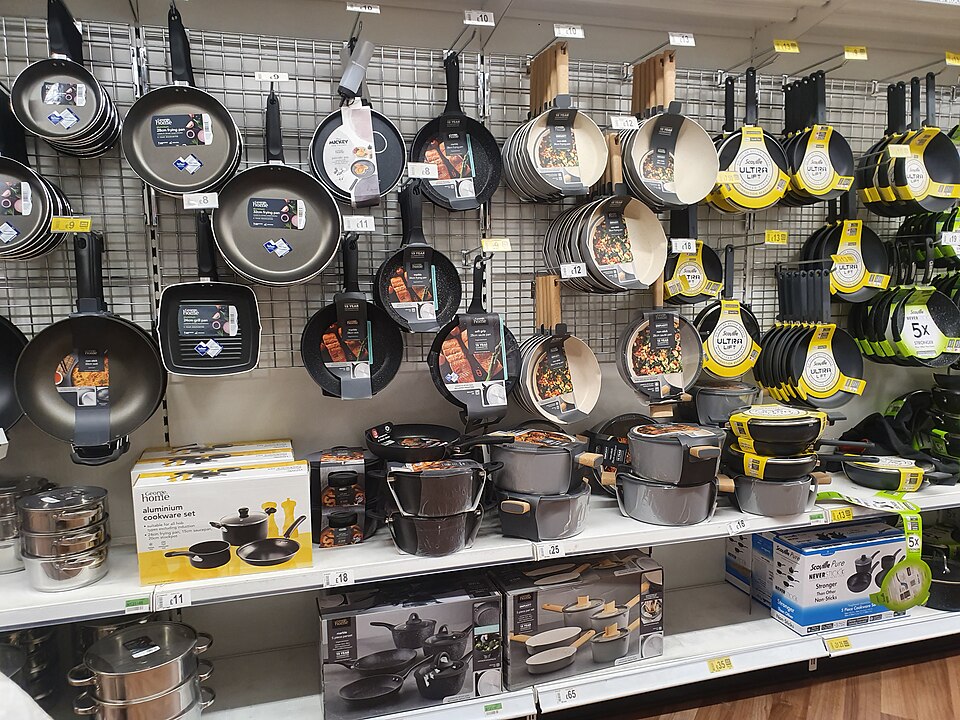
Thankfully, California and several other states have already taken action to protect consumers. California requires that manufacturers of cookware (including bakeware and kitchen appliances like coffee makers) publicly disclose any intentional use of PFAS and other problematic chemicals and clearly label all cookware items that contain intentionally-added PFAS both on a physical label and on the product page online.
California and Connecticut prohibit cookware from being sold, offered for sale, or distributed in the state unless the cookware and the manufacturer of the cookware complies with their disclosure and labeling provisions.
And additional states like Maine, Minnesota, and Colorado have outright banned PFAS from cookware sold in their states to protect consumers.
You can read about California’s requirements for online disclosure of these chemicals, including PFAS, lead, and other chemicals, in the California Attorney General’s advisory about their AB 1200 law. The disclosure and labeling requirements apply when a listed chemical such as a PFAS is intentionally included in the handle of the product or in any product surface that comes into contact with food, foodstuffs, or beverages.
Where Can I Find Brands’ Cookware Materials?
While California’s disclosure requirements have been in effect since 2023 and disclosures are required to be available online, you might not know where to find them.
Defend Our Health’s team have reviewed the websites of more than 200 cookware brands and compiled a directory of product disclosure pages so that you can make the choice that’s right for you with the best information about what’s in the products you’re buying!
Are Hazardous Chemicals Being Intentionally Added?
California’s disclosure requirements for cookware reference California’s Department of Toxic Substances Control (DTSC)’s Candidate Chemicals List. According to DTSC, a Candidate Chemical is a chemical that exhibits a “hazard trait and/or an environmental or toxicological endpoint” and is found on one or more of their authoritative lists or listed by DTSC using an intensive scientific review process.
These chemicals are known or suspected to contribute to adverse effects in humans, animals, or in ecological communities – that is, they may be harmful to people, animals, or the environment.
California’s full list of these hazardous chemicals includes the entire class of PFAS, as well as lead, arsenic, formaldehyde, D4, D5, and D6 cyclosiloxanes (silicone-based compounds), and a variety of others.
Our review of more than 200 cookware manufacturers’ public materials disclosures found multiple cookware brands that disclose use of PFAS, lead, arsenic, and formaldehyde. Importantly, many brands make equivalent products that are affordable and free of these chemicals.
The Many (Confusing!) Names of PFAS
A rose by any other name would smell as sweet, and PFAS by any other name are still PFAS. Researchers, lawmakers, and regulators around the world are defining PFAS as a class of toxic chemicals. There is broad scientific consensus that supports defining PFAS as “a class of fluorinated organic chemicals containing at least one fully fluorinated carbon atom.”
Industry, manufacturers, and retailers sometimes use the names of specific PFAS and then claim that a product is “non-toxic” or “safe” because their product does not contain one specific chemical out of the 15,000 chemicals classified as PFAS.
However, California, Maine, Minnesota, Colorado, Connecticut, and many other states have regulated the entire class of per- and polyfluorinated alkyl substances (PFAS), and the reporting, disclosure, and sales prohibitions from these states apply to all PFAS.
So what other words mean there is PFAS in a product?
- PFOA (perfluorooctanoic acid)
- PFOS (perfluorooctane sulfonic acid)
- PTFE (polytetraflouroethylene)
- PFA (perfluoroalkoxy alkane polymer)
- FEP (fluorinated ethylene and propylene)
- Fluoropolymer (a term for PFAS polymers/plastics)
- Teflon (a trademarked brand of PFAS)
Caution! You may see claims that an item is “PFOA-free” or “PFOS-free” but that only means the product doesn’t contain that specific PFAS chemical.
We found multiple instances where a brand’s AB 1200 disclosure stated a product contained PFAS, but the product page description said “PFOA-free” or “Free of PFOS” and failed to mention the PFAS content.
Want to learn more?
- Search the Cookware Brand Chemicals Disclosure Directory
- Detox your kitchen! A few simple steps can reduce your exposure to toxic chemicals starting today
- Learn how state laws are improving cookware safety nationwide
- Find out why scientists and policymakers define PFAS as a class of toxic chemicals
- Check the facts: Are PFAS safe for food-contact materials like cookware?
- Dig in to what the experts say about PTFE, the PFAS plastic most commonly used in cookware
- Take Action: Demand that big retailers and cookware brands stop selling PFAS cookware nationwide!
If you found this information useful and would like to support Defend Our Health’s work, please consider becoming a monthly sustainer! Together, we can expose avoidable toxic chemicals in consumer goods and advocate for safer solutions that protect families and communities.