While the US Food and Drug Administration (FDA) continues to “authorize” certain PFAS for use in food-contact materials, state lawmakers and regulators are stepping up to protect consumers from these hazardous chemicals.
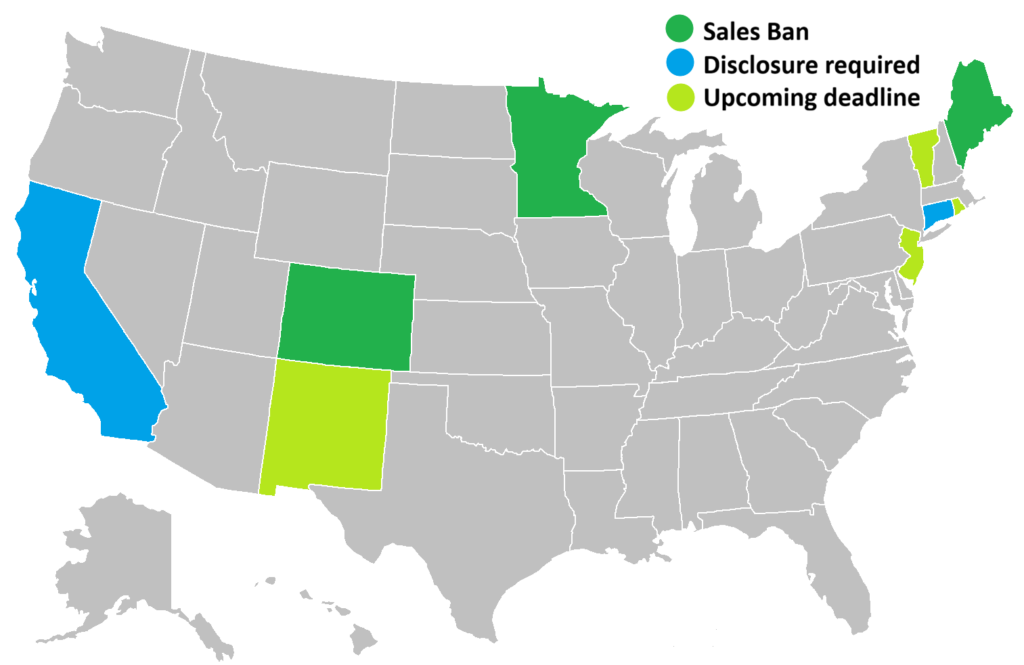
Sales Bans – PFAS Pots and Pans Prohibited!
Effective January 1, 2025, Minnesota implemented a ban on the sale of many consumer products, including cookware, containing intentionally added PFAS under Amara’s Law (Minn. Stat. § 116.943).
Beginning January 1, 2026, Maine implemented a ban on the sale, offering for sale, or distribution of many consumer products, including cookware, containing intentionally added PFAS under its PFAS-in-Products law (38 M.R.S.A. § 1614) and related rules.
Effective January 1, 2026, Colorado implemented a ban on the sale or distribution of many consumer products, including cookware, containing intentionally added PFAS under SB 24‑081.
Effective January 1, 2028, Connecticut will ban the manufacture, sale, offering for sale, or distribution for sale of many PFAS-containing products, including cookware.
PFAS Labeling and Public Disclosure Requirements
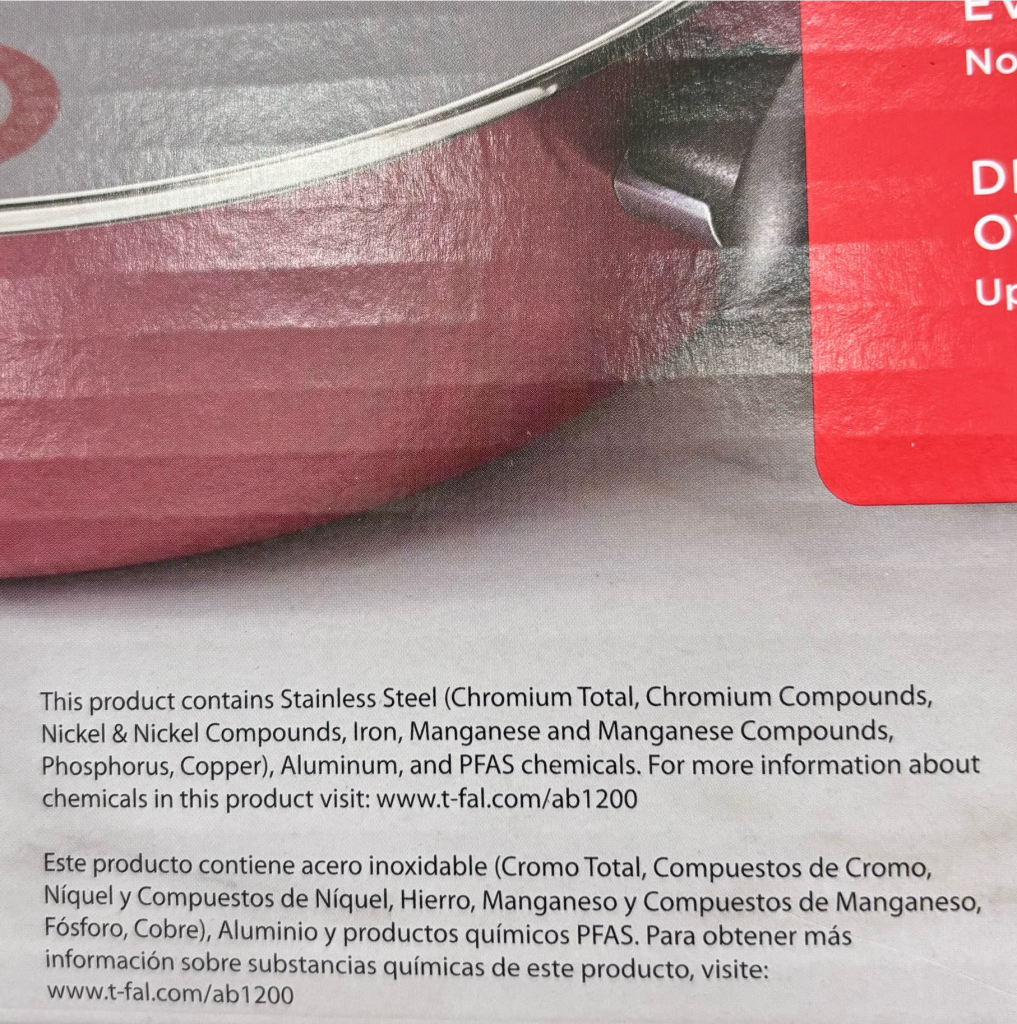
As of January 1, 2023, California requires companies to post an online disclosure of all the intentionally-added candidate chemicals (including PFAS) in their cookware. As of January 1, 2024, companies are also required to publicly disclose PFAS in cookware on product labels and all online product listings, and manufacturers are not allowed to claim that cookware is free of any specific PFAS if the product contains any PFAS. It is illegal to sell, offer for sale, or distribute cookware in California unless the cookware and its manufacturer fully comply with these rules.
As of July 1, 2026, Connecticut now requires companies to report on and publicly disclose the use of PFAS in many consumer products, including cookware, containing intentionally-added PFAS, pursuant to Connecticut Public Act 24-59. This law also prohibits manufacturing, selling, offering or distributing for sale PFAS-containing products unless the manufacturer is in compliance with the state’s reporting and labeling requirements.
New Jersey, Vermont, and New Mexico have upcoming deadlines for cookware-related PFAS disclosure, reporting, or sales restrictions. (Here’s a full list of state laws banning PFAS in various consumer goods categories.)
States Create Strong Protections for All Consumers
These existing disclosure, reporting, and sales prohibition laws are state-specific, but because they apply to both brick-and-mortar and online sales, they are making it easier for consumers in any state to determine if PFAS is present in a cookware item, and to avoid purchasing items that contain PFAS.
Regulators in sales-ban states are able to use disclosure information to conduct compliance enforcement, reducing the need for costly product testing and ensuring that products with hazardous chemicals are quickly removed from sale.
And policymakers in states that are considering restrictions on PFAS in cookware and other consumer goods are able to see that industry can easily comply with these laws, so expanding disclosure or sales prohibitions to additional states does not pose an undue burden on manufacturers and retailers.
Because of California’s requirements, the industry already has all the information they need (data on which products do or do not contain intentionally-added PFAS), so they just need to update their online and brick-and-mortar sales to cease sales to addresses in states with sales bans. Big brands with tens or hundreds of millions of dollars in annual revenue have compliance and legal teams that should find it trivial to follow these state laws.
Additional states are considering phasing out the sale of PFAS-coated cookware, but concerned consumers can choose to buy PFAS-free cookware products even if they live in a state that has not yet taken action.
Want to learn more?
- Return to the homepage
- Search the Cookware Brand Chemicals Disclosure Directory
- Detox your kitchen! A few simple steps can reduce your exposure to toxic chemicals starting today
- Find out why scientists and policymakers define PFAS as a class of toxic chemicals
- Check the facts: Are PFAS safe for food-contact materials like cookware?
- Dig in to what the experts say about PTFE, the PFAS plastic most commonly used in cookware
- Take Action: Demand that big retailers and cookware brands stop selling PFAS cookware nationwide!
If you found this information useful and would like to support Defend Our Health’s work, please consider becoming a monthly sustainer! Together, we can expose avoidable toxic chemicals in consumer goods and advocate for safer solutions that protect families and communities.